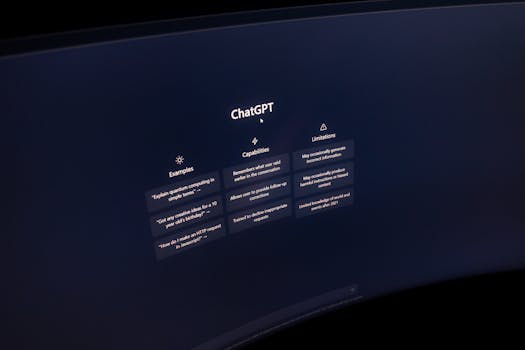
It’s easy to dismiss AI-powered assistants as mere voice-activated gadgets that play music or tell you the weather. While that’s certainly part of their story, it’s like saying a Formula 1 car is just a means of getting from point A to point B. The reality of AI-powered assistants is far more profound, touching upon how we work, learn, and interact with technology on an unprecedented scale. These aren’t just tools; they’re becoming extensions of our own capabilities, learning, adapting, and anticipating our needs.
What Exactly Is an AI-Powered Assistant?
At its core, an AI-powered assistant is a software agent designed to perform tasks or provide services for an individual, based on commands or questions. What sets them apart from simpler automation is their reliance on artificial intelligence, particularly machine learning and natural language processing (NLP). This means they can understand context, learn from interactions, and even predict what you might need next.
Think of it this way: a traditional search engine gives you a list of results based on keywords. An AI assistant, however, can interpret the intent behind your query. If you say, “Find me a good Italian restaurant near me that’s open late and has outdoor seating,” it’s not just matching keywords. It’s understanding nuances like “good,” “near me,” “open late,” and “outdoor seating,” then synthesizing that information to provide a relevant recommendation. This ability to process and understand human language is a game-changer.
The Pillars of AI Assistant Functionality
The magic behind these assistants is a sophisticated blend of several AI disciplines.
Natural Language Processing (NLP): This is the bedrock. NLP allows the assistant to understand, interpret, and generate human language, both written and spoken. It’s how Siri, Alexa, and Google Assistant decipher your commands and respond in a way that sounds (mostly) natural.
Machine Learning (ML): ML enables assistants to learn from data. The more you interact with them, the better they become at understanding your preferences, habits, and even your tone of voice. This personalization is what transforms a generic tool into a truly helpful companion.
Speech Recognition: For voice-activated assistants, this is crucial. It converts your spoken words into text that the NLP engine can then process. Accuracy here has improved dramatically, making hands-free interaction seamless.
Contextual Awareness: Advanced assistants can maintain context across multiple interactions. If you ask, “What’s the weather like today?” and then follow up with, “And tomorrow?” the assistant knows you’re still asking about the weather, just for a different day.
Revolutionizing Productivity in the Workplace
The impact of AI-powered assistants on professional productivity is perhaps the most immediate and tangible. They are rapidly moving beyond simple task management to become integral parts of daily workflows.
Automating Repetitive Tasks: From scheduling meetings and sending follow-up emails to transcribing notes and generating reports, AI assistants can handle a myriad of mundane, time-consuming tasks. This frees up human professionals to focus on higher-level, strategic, and creative work. I’ve often found that delegating simple administrative duties to an AI frees up hours in my week that I can now dedicate to critical thinking and client engagement.
Enhanced Information Retrieval: Need to find a specific document, a key piece of data from a long report, or the contact information for a colleague? An AI assistant can sift through vast amounts of data much faster than a human, retrieving precisely what you need, often with context.
Streamlined Communication: AI can help draft emails, summarize long threads, and even suggest responses, significantly speeding up communication cycles. For teams, this can mean fewer misunderstandings and quicker decision-making.
Personalized Workflow Support: As AI assistants learn your work patterns, they can proactively offer suggestions, remind you of upcoming deadlines, or even queue up relevant documents before a meeting. This predictive capability is where the real power lies.
Personalizing Our Daily Lives
Beyond the office, AI-powered assistants are woven into the fabric of our personal lives, making everyday activities more convenient and tailored.
Smart Home Management: Controlling lights, thermostats, entertainment systems, and security devices is just the beginning. Assistants can learn your routines, like turning on the coffee maker when you wake up or dimming the lights for movie night.
Information On Demand: From checking traffic and weather to getting quick answers to trivia questions or finding recipes, assistants provide instant access to information without needing to pick up a device.
Personalized Recommendations: Whether it’s suggesting music, podcasts, news articles, or even products, AI assistants are getting increasingly adept at understanding our tastes and offering tailored suggestions. This can lead to delightful discoveries.
Accessibility Enhancements: For individuals with disabilities, AI assistants can be transformative, enabling greater independence through voice control of various devices and services.
The Future is Collaborative: Human + AI Synergy
The conversation around AI-powered assistants is evolving. Instead of viewing them as replacements for human workers, the focus is shifting towards a collaborative synergy. AI can handle the data processing, the routine tasks, and the pattern recognition, while humans bring creativity, emotional intelligence, strategic thinking, and ethical judgment to the table.
This human-AI partnership promises to unlock new levels of innovation and problem-solving. Imagine a doctor using an AI assistant to quickly analyze patient data and suggest potential diagnoses, allowing the doctor to spend more time with the patient discussing treatment options. Or a designer leveraging AI to generate numerous design variations, freeing them up to refine the most promising concepts.
Navigating the Evolving Landscape
As AI-powered assistants become more sophisticated, several considerations emerge. Privacy and data security are paramount. Ensuring that our personal and professional data is handled responsibly is crucial. Furthermore, understanding the limitations of AI and the importance of human oversight remains vital. AI can make errors, exhibit biases learned from its training data, or misinterpret complex nuances.
However, the trajectory is clear. AI-powered assistants are no longer a futuristic concept; they are a present reality that is rapidly shaping our world. Embracing these tools, understanding their capabilities, and learning to work alongside them will be key to thriving in the years to come. The potential for enhanced efficiency, personalized experiences, and groundbreaking innovation is immense, and we are only just beginning to tap into it.
Wrapping Up: The Indispensable Digital Partner
AI-powered assistants have transcended their initial roles as novelty gadgets. They are fast becoming indispensable digital partners, augmenting our abilities and streamlining our lives in ways that were once confined to science fiction. From boosting professional productivity through intelligent automation to personalizing our daily routines with predictive insights, their influence is undeniable. As this technology continues to mature, the true power will lie in the seamless integration of human ingenuity with AI’s computational prowess, ushering in an era of unprecedented efficiency and innovation. Keeping an eye on developments in this space isn’t just about staying current; it’s about preparing for the future of work and life.