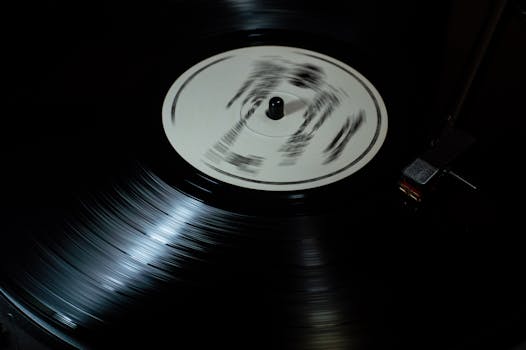
Remember the satisfying thump as the tonearm lowered onto the groove? For many, that sound is more than just audio playback; it’s a gateway to a tactile, deliberate listening experience that seems to be increasingly out of step with our instantaneous digital world. Yet, vinyl records are experiencing a remarkable resurgence, far beyond a mere retro fad. It begs the question: what’s truly driving this enduring fascination with these black discs? Is it purely about nostalgia, or is there something more profound at play?
The Tangible Connection in a Digital Deluge
In an era dominated by invisible streams and ephemeral playlists, the physical presence of a vinyl record offers a powerful antidote. Holding an album, with its substantial weight and large-format artwork, transforms music consumption from a passive background hum into an intentional engagement. You’re not just listening; you’re interacting with a tangible object.
This physicality extends to the act of playing. Setting up a turntable, carefully placing the needle, and flipping the record over each side requires a conscious effort. It’s a deliberate ritual that fosters a deeper connection to the music, encouraging focused listening sessions rather than the fragmented, multi-tasking habits that digital media often promotes. I’ve often found that when I commit to listening to an album on vinyl, I absorb it in a way I simply don’t with streaming services.
Unpacking the “Warmth”: Is There an Audible Difference?
Ah, the infamous “warmth” of vinyl. This is a hotly debated topic, and frankly, one that can get bogged down in audiophile jargon. But let’s strip it back. Many proponents of vinyl argue that analog reproduction inherently possesses a richer, more natural sound profile compared to the compressed, digitally processed audio common today.
There’s a technical argument here, too. Early digital audio formats, while revolutionary, often involved compromises in dynamic range and fidelity. Vinyl, at its best, can capture a wider spectrum of sound and a greater sense of space. However, it’s crucial to acknowledge that the quality of the pressing, the mastering process, and the turntable setup itself play monumental roles in the final sound. A poorly mastered or pressed record will rarely sound better than its digital counterpart. It’s an interesting point: is the perceived warmth a genuine sonic characteristic, or a placebo effect amplified by the overall ritual?
The Collector’s Quest: More Than Just Music
For a significant segment of the vinyl community, collecting is a primary driver. This isn’t just about acquiring any copy of an album; it’s about the hunt, the discovery, and the ownership of a piece of history. Limited editions, rare pressings, and vintage finds all contribute to a thriving secondary market.
This aspect taps into a primal human desire for acquisition and curation. Building a record collection is akin to building a personal library or a curated art gallery. Each record tells a story, not just through its music, but through its journey – the scratches, the faded cover art, the price stickers from decades past. It’s a tangible representation of one’s musical tastes and evolving sonic journey. The thrill of finding that long-sought-after album at a flea market or a specialist shop is an experience digital downloads simply can’t replicate.
Navigating the Nuances: What to Consider Before Diving In
So, if the allure of vinyl is clear, where does one begin? It’s a journey that can be as rewarding as it is occasionally bewildering.
Turntable Choices: The cornerstone of any vinyl setup is the turntable. There’s a vast spectrum, from entry-level models to audiophile-grade behemoths. For beginners, a good quality mid-range turntable offers a balance of performance and affordability. Look for features like adjustable counterweight and anti-skate.
Cartridge Matters: The cartridge and stylus (needle) are the instruments that read the groove. Different cartridges have distinct sonic characteristics, and a worn stylus can damage your records. Investing in a decent cartridge is paramount.
Phono Preamplifier: Most modern amplifiers don’t have a dedicated phono input. You’ll likely need a phono preamplifier to boost the signal from your turntable to a usable line level. Some turntables have these built-in, which can simplify things.
Record Care: Maintaining your vinyl collection is crucial for both sound quality and longevity. This involves regular cleaning with specialized brushes and solutions, and proper storage to prevent warping and damage.
The Future of Analog Sound: An Evolving Conversation
Vinyl’s resurgence isn’t about replacing digital music; it’s about offering a complementary and, for many, a superior listening experience. It represents a conscious choice to engage more deeply with art and sound. As technology continues to advance, we’re seeing innovative approaches to vinyl production and playback, ensuring its relevance in the years to come.
Is vinyl right for everyone? Perhaps not. It requires a certain commitment of time, space, and investment. But for those who are drawn to its tactile nature, its sonic potential, and its rich culture, the journey into the world of vinyl records is a profoundly rewarding one.
Wrapping Up: Embrace the Journey, One Groove at a Time
The enduring appeal of vinyl is a testament to its unique blend of sensory engagement, sonic possibility, and cultural significance. If you’re curious, don’t be intimidated by the perceived complexity. Start with an album you love, a decent entry-level turntable, and an open mind. You might just discover a new way to fall in love with music all over again.