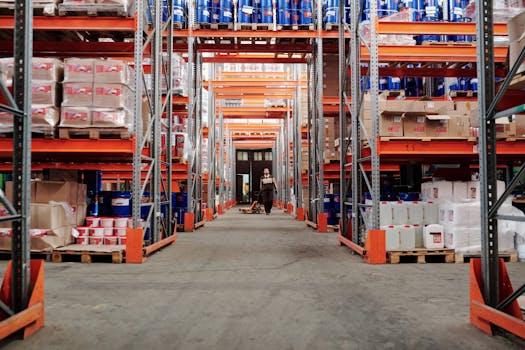
Remember that feeling of anticipation when you ordered something online? The quick “order confirmed” email, the thrilling “out for delivery” notification, and finally, the satisfying thud of the package on your doorstep. It’s a seamless experience, isn’t it? But what’s truly happening behind that digital curtain? We often think of a susupply chains a purely logistical puzzle – trucks, warehouses, and efficient routes. Yet, beneath the surface of every product we consume lies a complex, dynamic, and often surprisingly vulnerable ecosystem. It’s a network of relationships, decisions, and risks that profoundly impacts not just businesses, but our very lives.
What if we stopped seeing it as just a cost center and started viewing it as the strategic heart of an organization? This isn’t just about getting goods from point A to point B; it’s about resilience, innovation, and ultimately, competitive advantage. Let’s peel back the layers and explore the deeper currents that truly define a modern supply chain.
Is the “Just-in-Time” Mantra Still a Golden Rule?
For decades, “just-in-time” (JIT) inventory management has been the darling of efficiency. The idea is simple: minimize warehousing costs by receiving goods only as they are needed in the production process. It’s elegant in theory, reducing waste and freeing up capital. However, the seismic disruptions of the past few years – from pandemics to geopolitical tensions – have cast a harsh spotlight on its fragility.
Have we become too reliant on lean principles at the expense of robustness? When a single port closure or a natural disaster can halt global production, it begs the question: are we prepared for the inevitable shocks? This isn’t to say JIT is dead, but perhaps it’s time for a more nuanced approach, a blend of lean efficiency with strategic buffer stocks. It’s a delicate balancing act, isn’t it? We’re constantly seeking that sweet spot between cost-effectiveness and the ability to weather unforeseen storms.
The Unseen Power of Supplier Relationships
Beyond the tangible flow of goods, the true strength of any supply chain lies in its relationships. Think about it: your business doesn’t operate in a vacuum. It’s deeply intertwined with a web of suppliers, some of whom you might never even meet face-to-face. How well do you truly know your tier-2 or tier-3 suppliers?
In my experience, the companies that thrive are those that invest in building strong, collaborative partnerships. This means transparency, shared risk, and a commitment to mutual growth. It’s about understanding their challenges, their capabilities, and their own vulnerabilities. Are we fostering true partnerships, or are we merely engaging in transactional exchanges? The difference can be monumental, especially when the going gets tough. A solid supplier relationship can be your greatest asset when navigating complex global sourcing challenges.
Data: The Nervous System of Tomorrow’s Supply Chain
We live in an age of data, yet many supply chains are still operating with blind spots. Imagine trying to navigate a city with no map, no GPS, and no real-time traffic updates. That’s akin to managing a supply chain without leveraging its full data potential. From predictive analytics for demand forecasting to real-time tracking of shipments and even environmental impact assessments, data is the lifeblood.
But it’s not just about collecting data; it’s about making it actionable. How do we integrate disparate systems? How do we translate raw information into intelligent decisions? This requires investment in technology, yes, but more importantly, it demands a cultural shift towards data-driven decision-making. The future of supply chain management is intrinsically linked to our ability to harness and interpret this vast ocean of information. It’s about transforming data from a passive record into an active intelligence system.
Navigating the Ethical and Sustainability Minefield
The conversation around supply chains has expanded far beyond efficiency and cost. Consumers, regulators, and investors are increasingly demanding accountability for ethical labor practices and environmental sustainability. Where are your products made? What are the working conditions? What is the carbon footprint of your logistics? These are no longer niche concerns; they are becoming central to brand reputation and long-term viability.
Addressing these challenges requires a deep dive into every tier of your supply chain. It’s about asking tough questions and demanding transparency. This isn’t just about compliance; it’s about building a supply chain that aligns with your company’s values and resonates with a conscious consumer base. Are we proactively embedding ethical and sustainable practices into our supply chain strategy, or are we waiting to be pushed? The businesses that embrace this proactively are the ones that will define the future.
The Future of Supply Chain: Agility, Resilience, and Intelligence
So, where does this leave us? The traditional view of a linear, predictable supply chain is rapidly becoming obsolete. The future belongs to those that can master agility, build true resilience, and leverage intelligence at every turn. It’s about moving beyond a reactive stance to a proactive, predictive model.
It’s about recognizing that the supply chain is not a siloed function but a core strategic driver of business success. It’s the silent architect of customer satisfaction, the enabler of innovation, and the guardian of your brand’s reputation. As we continue to navigate an increasingly complex and unpredictable world, understanding and optimizing your supply chain isn’t just a business imperative; it’s a fundamental requirement for thriving.
What innovative strategies are you exploring to build a more robust and responsible supply chain within your organization?